The 6-month plan to become actually hireable, not just certified
ESTIMATED TIME
10
mins

Written by
Shikha Prasad
Published on
The certificate was month zero. Here's what the next six months are actually for.
Sana passed her Scrum Master certification on a Tuesday and applied to eleven jobs by Friday. She sent me a photo of the certificate, still warm from the printer, with one line underneath: “Finally. Now it starts.”
Six weeks later we talked again. Fifty one applications by then. Two replies, both rejections. Her voice had that careful flatness people use when they're trying not to sound scared, and she asked the question I've heard from more newly certified people than I can count. “Did I waste my money?”
She hadn't. But somewhere between the course and the job boards, someone let her believe the certificate was a finish line. It isn't. It's month zero. The exam proved she could learn the vocabulary. It said nothing about whether she could do the work, and hiring managers know the difference. The difference is the whole reason interviews exist.
So here's the conversation I had with Sana, written down properly. A six month arc from certified and invisible to credibly hireable. Not a hack. A plan you can start this week.
What you're really asking a stranger to believe
Sit on the other side of the desk for a minute. A hiring manager opens an application. She sees a certification, maybe two, and a work history from a different field. No delivery work anywhere on the page.
To say yes, she has to believe that someone who's never run a planning session can hold one with a team that's already behind. That someone who's read about blockers can spot a quiet one on a real board. That's a lot of believing, and her last bad hire taught her not to.
Here's the part the course never covers: she doesn't doubt your knowledge. She doubts your reps. When she asks you to walk her through a sprint that went sideways, she isn't testing your memory of the Scrum Guide. She's checking whether you've ever stood in the mess. A certificate can't answer that question. It was never designed to.
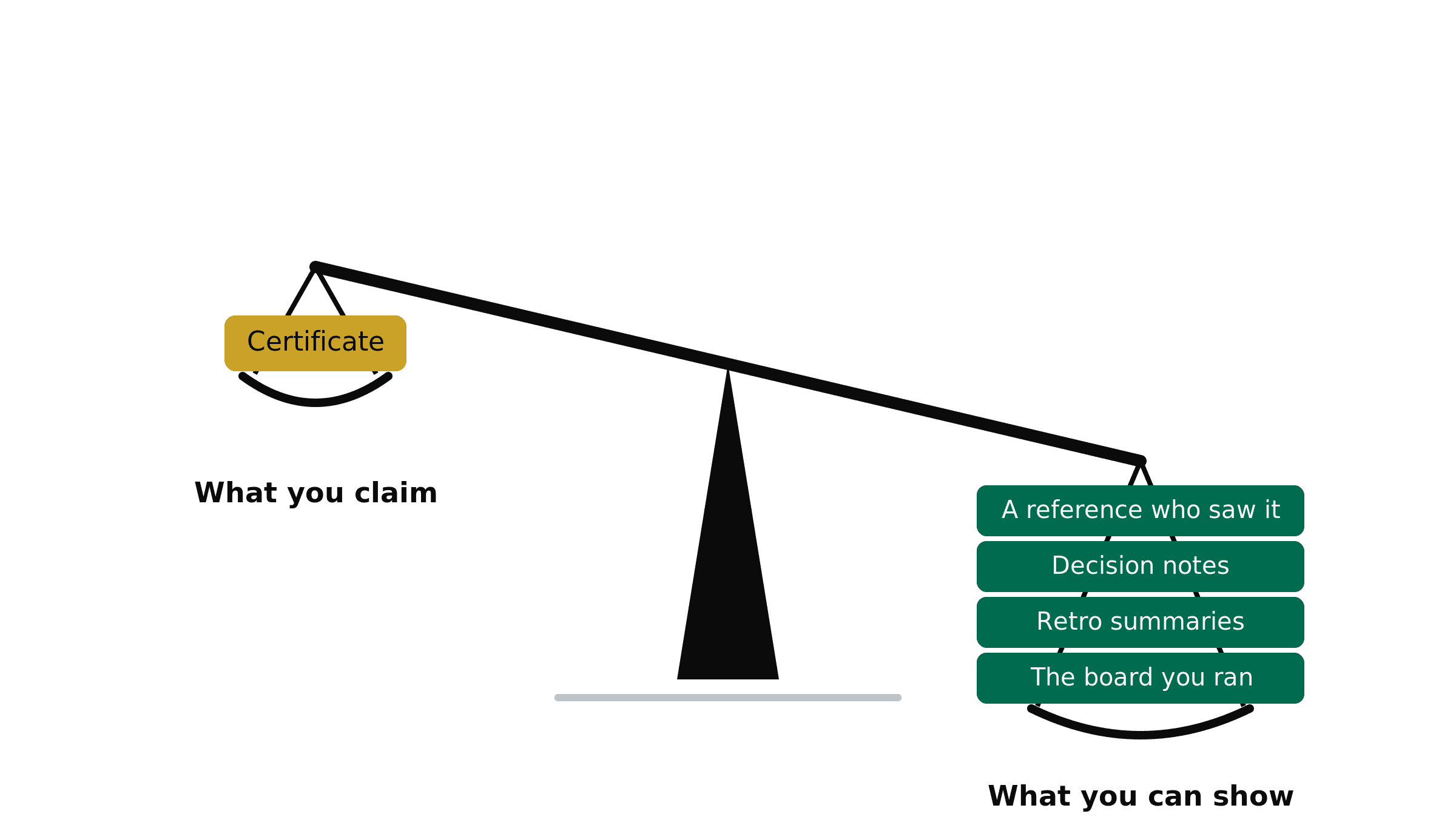
Hiring is a weighing exercise. On one side sits everything you claim. On the other, everything you can show. The certificate sits on the claims side, and on its own it's light. The next six months exist to load the other pan.
Six months, climbed like a switchback
Nobody walks straight up a mountain. The path that actually gets people to the top zigzags: traverse, turn, climb a little, traverse again. This plan works the same way. Each month leans on the one before it, and not one of them requires an employer's permission to start.
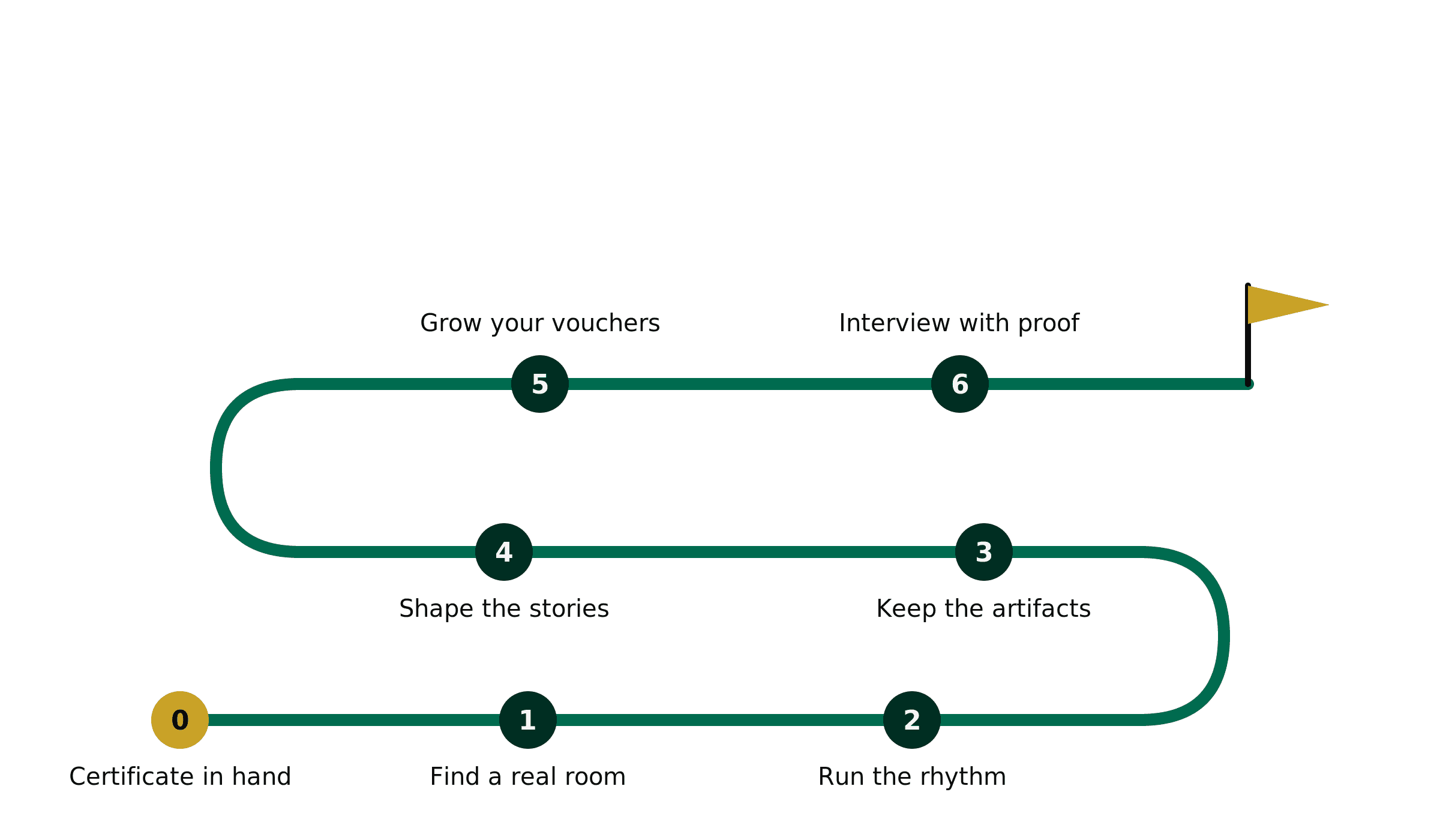
Months one and two: get into a real room
You can't practice delivery in your head. So the first move is to find a real team with real friction, and there are more of those around you than you think:
A nonprofit, community group, or student club drowning in coordination. Offer to run their weekly planning and a short retro.
A friend's small business, or an open source project with plenty of contributors and no rhythm.
Your own current job. Facilitate one recurring meeting. Own one messy dependency end to end. Run one retro, even if nobody calls it that.
A real project of your own, like a community event or a small launch, run with an actual backlog and a weekly cadence.
What makes a room real isn't its size. It's that other people are depending on the outcome and something can genuinely go wrong. A practice board you update alone teaches you the tool. A team teaches you the job.
Sana found hers at a local food bank that coordinated grocery pickups through one overwhelmed volunteer and a group chat nobody read. She offered to run a twenty minute weekly planning call. Real people, real no-shows, one driver who never updated anyone about anything. It wasn't a simulation, which is exactly why it counted.
Month three: keep what your hands touch
By month three the reps exist. Now stop letting the evidence evaporate. The simple board the team actually used. A three line note on a decision you made and why. A one page retro summary. The risk you flagged two weeks before it bit. None of it gets made for show. You make it because it helps the team, and you keep it because it proves you were there.
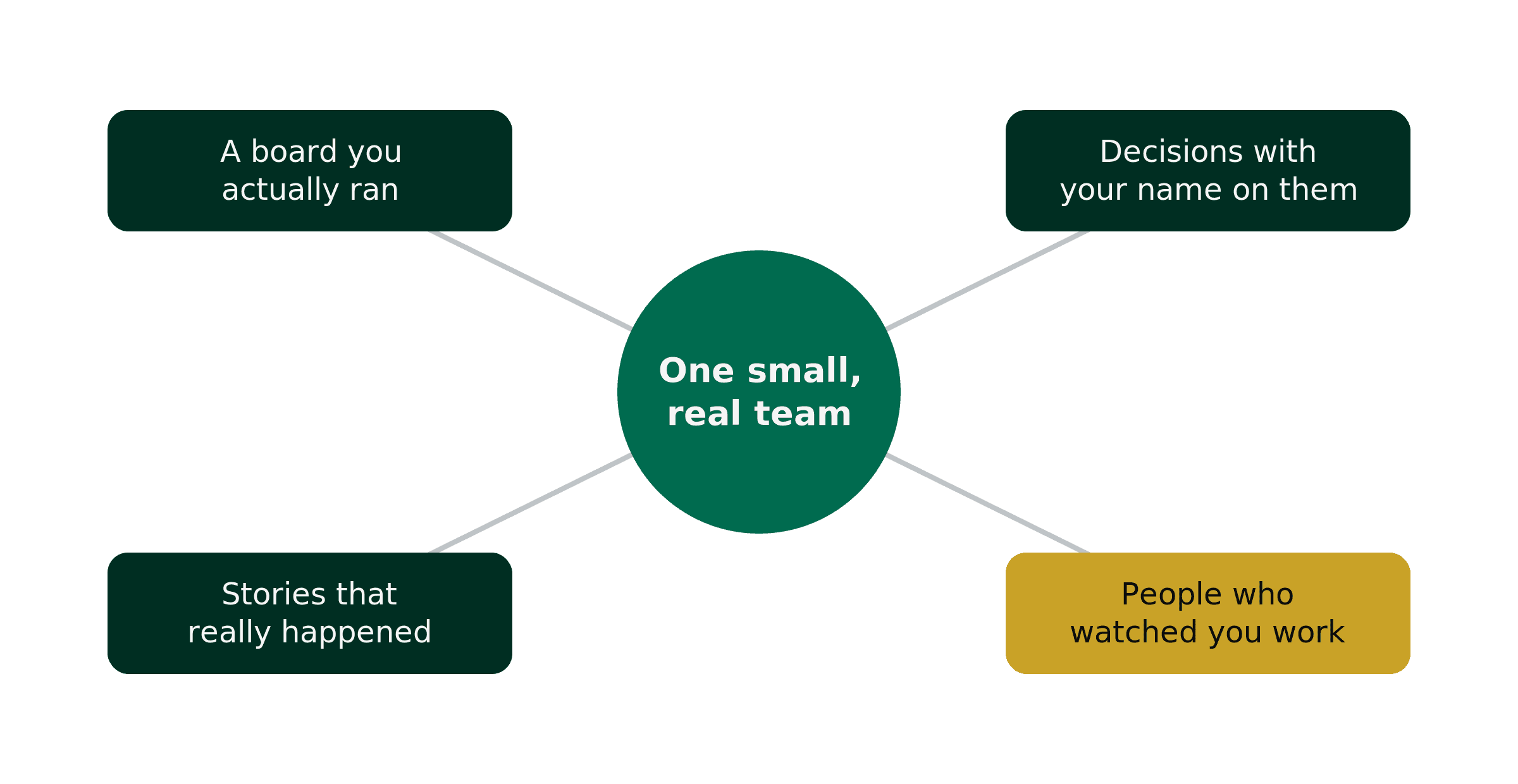
One small, real team quietly produces every kind of proof an interview will later ask for. Your only extra job is to not throw it away.
Month four: let the reps turn into stories
A story is just a rep with its shape preserved: what I noticed, what I did, what changed. Take eight or ten moments from your months in the room and write them down in that shape while the details are still fresh.
You'll notice something kind here. You don't have to rehearse what's true. “I know how to surface blockers” is a weak sentence anyone can say. “Our most reliable driver went quiet for two weeks, and the board showed it before anyone said it out loud” lands, because it has the texture only real events have.
Don't polish them into scripts, either. Keep each one three or four sentences, true and specific. You're not memorizing answers. You're indexing your own memory so the right story surfaces on its own when the question comes.
Month five: collect people, not contacts
The network that matters isn't built at networking events. It's a side effect of work. The food bank director who watched Sana untangle the scheduling mess. The developer friend who built the signup form she asked for. These people can vouch for you, and one person who can vouch is worth fifty connections who couldn't pick you out of a lineup.
Month five is also when reaching out gets easier, because you've changed what you're carrying. You're no longer approaching strangers with “please notice me.” You're coming with “here's what I've been running, what am I missing?” People answer builders.
Month six: walk in with receipts
Now the application changes. The resume gains lines that are simply true: facilitated weekly planning for a cross functional volunteer team, surfaced blockers, protected the delivery rhythm. That's honest translation, not inflation. It was facilitation. The team just didn't pay you.
And the interview changes more. You bring a board you can talk through, stories with real texture, a person who'll take the reference call. The conversation stops being a vocabulary quiz and turns into two practitioners comparing notes. That's the room offers come from.
Aim honestly while you're at it. Adjacent doors count: project coordinator, junior delivery roles, short contracts. The title on your first delivery job matters far less than the reps it pays you to keep collecting.
And no, you don't pause the search for half a year
I can hear the objection, because Sana raised it too. Rent is real. Six months sounds like an eternity when you need an income.
So look at how the months actually overlap. You keep applying from week one if you need to. You just stop expecting volume alone to save you, because every month of building adds a true line the last application didn't have.
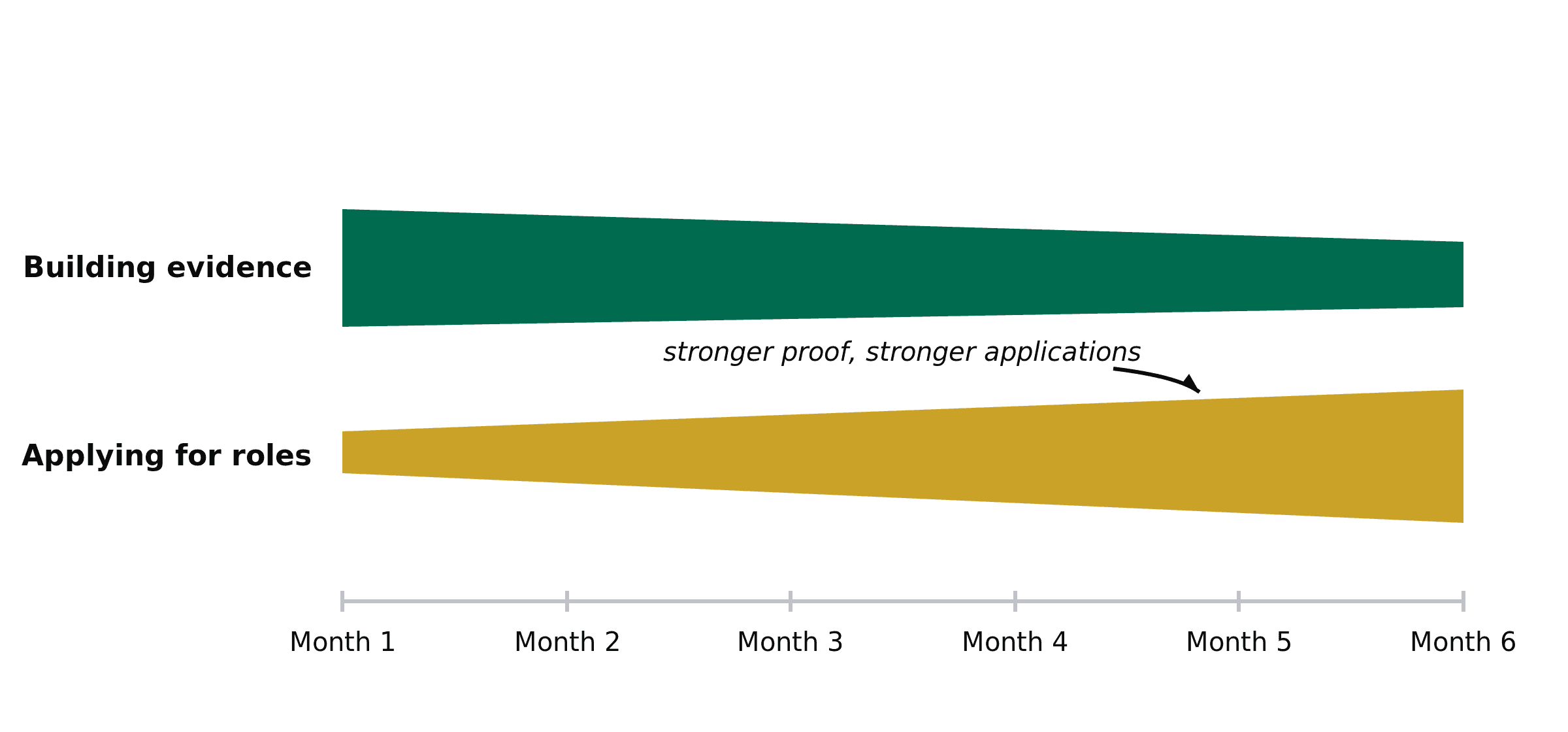
Compare the honest alternatives. Six months of building while you apply, or six months of sending the same certificate to a market that already said no fifty times. One of them is slow. The other is the same week repeated twenty six times.
Where Sana was in month seven
By month five her interviews felt different. She told me she talked less and showed more. In month seven she started a junior delivery coordination contract. Modest pay, real team, and a manager who told her afterwards that the food bank story was the moment he relaxed.
I won't promise you her timeline. Markets differ, cities differ, luck exists. What I can tell you is that hireable was never hiding inside the certificate. It lives in the evidence you build and in the people who watched you build it.
You don't fake the experience. You go get a small, real version of it, then you learn to talk about it like the professional you're becoming.
Month zero is behind you. Pick your room this week.

Subscribe to the Newsletter
Join our growing community and get alerted first on our every article.
*By subscribing, you agree to send your information to our Company who agrees to use it according to their Terms and conditions and Privacy Policy
About the author
I believe the strongest tool and flex each of us has is our belief. When we truly believe in something, we align our mindset, energy, and actions with the right effort and guidance. That is when achieving almost anything becomes possible. This is how I help mentees at OAKKTREEUNII move into Software and Project Management careers for better pay, better confidence, and better work-life balance.
Comments