Imposter syndrome doesn’t mean you’re faking. It means you’re growing.
ESTIMATED TIME
7
mins

Written by
Shikha Prasad
Published on
The feeling shows up at the edge of what you can do, not in the middle of a lie.
The night before her first day, Priya messaged me. Not excited. Scared. “They're going to figure out I don't actually know what I'm doing.”
She had passed the interview. The panel, the references, the case question about a stalled sprint, all of it. People who do this for a living had looked at her and decided yes. And she was certain she had fooled every one of them.
I told her what I want to tell you, because I have felt it too, and because almost everyone worth working with has. That feeling is not evidence that you are a fraud. It is evidence that you are standing somewhere new.
We treat imposter syndrome like a verdict. It is closer to a thermometer. It is reading something real, just not the thing you think it is.
The feeling lies about where it comes from
Imposter syndrome tells a very convincing story. Everyone else here belongs, and you slipped in through a door someone forgot to lock. Sooner or later they will notice, and you will be asked to leave.
But watch when it actually shows up.
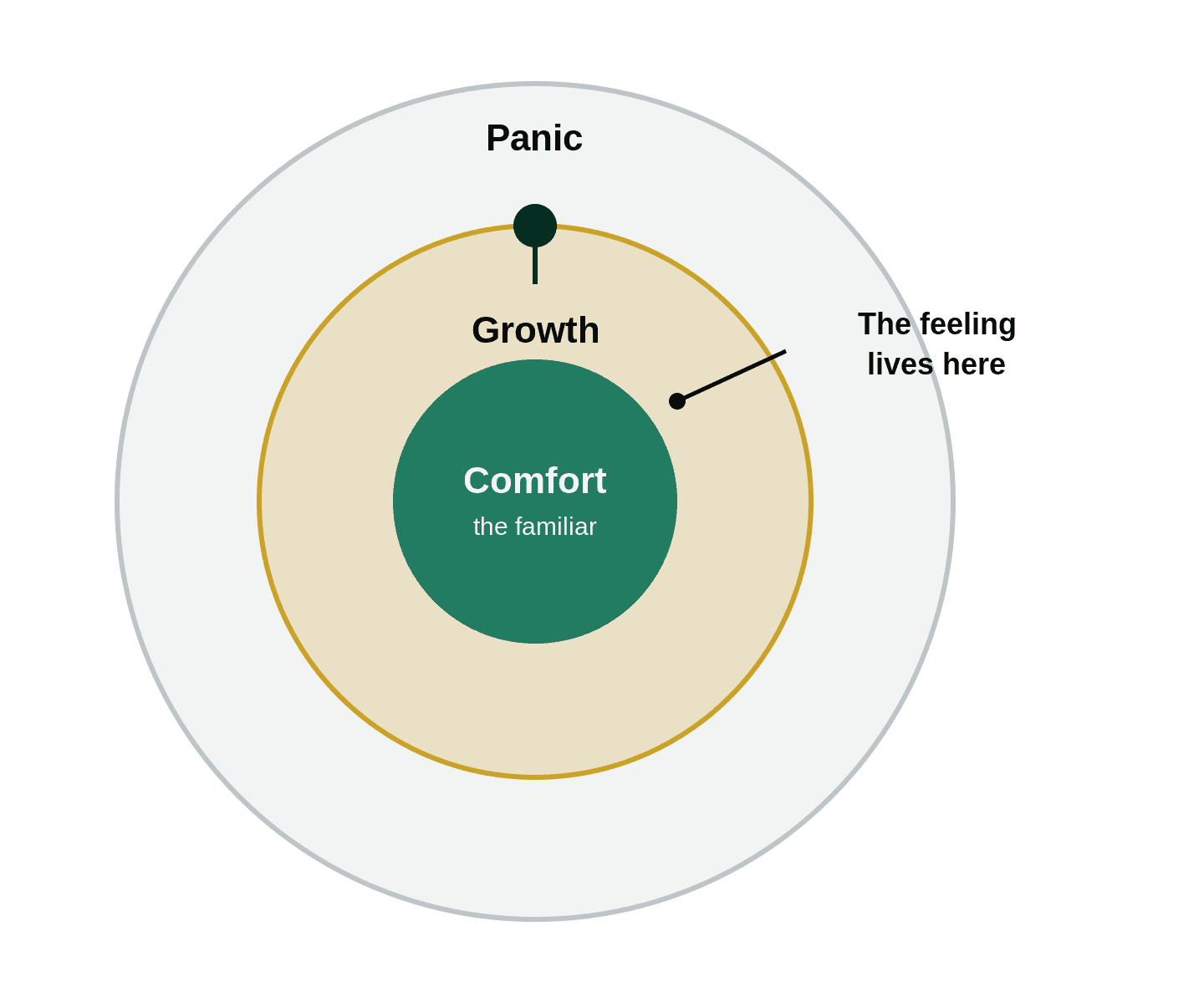
Not when you are coasting. Not in the middle of the task you have done a hundred times. It arrives the moment you reach for something one size bigger than your last proven rep. The new title. The harder stakeholder. The room where everyone has more grey hair than you. The feeling is not measuring your competence. It is measuring the distance between where you are and where you just decided to go.
That distance has a name. It is called growth. You only feel it because you are doing the brave thing instead of the safe one.
I have watched capable people read that exact sensation as a stop sign and walk back to the comfortable middle, where the feeling goes quiet. It does go quiet there. So does everything else.
Why the people most likely to feel it are the ones paying attention
Here is the part nobody mentions when they hand you a motivational quote about confidence.
The people most likely to feel like frauds are very often the ones doing the most careful work. There is a cruel symmetry to it. The more you learn about delivery, facilitation, the hundred small ways a team can quietly fall apart, the more you can see the gap between a decent job and a great one.
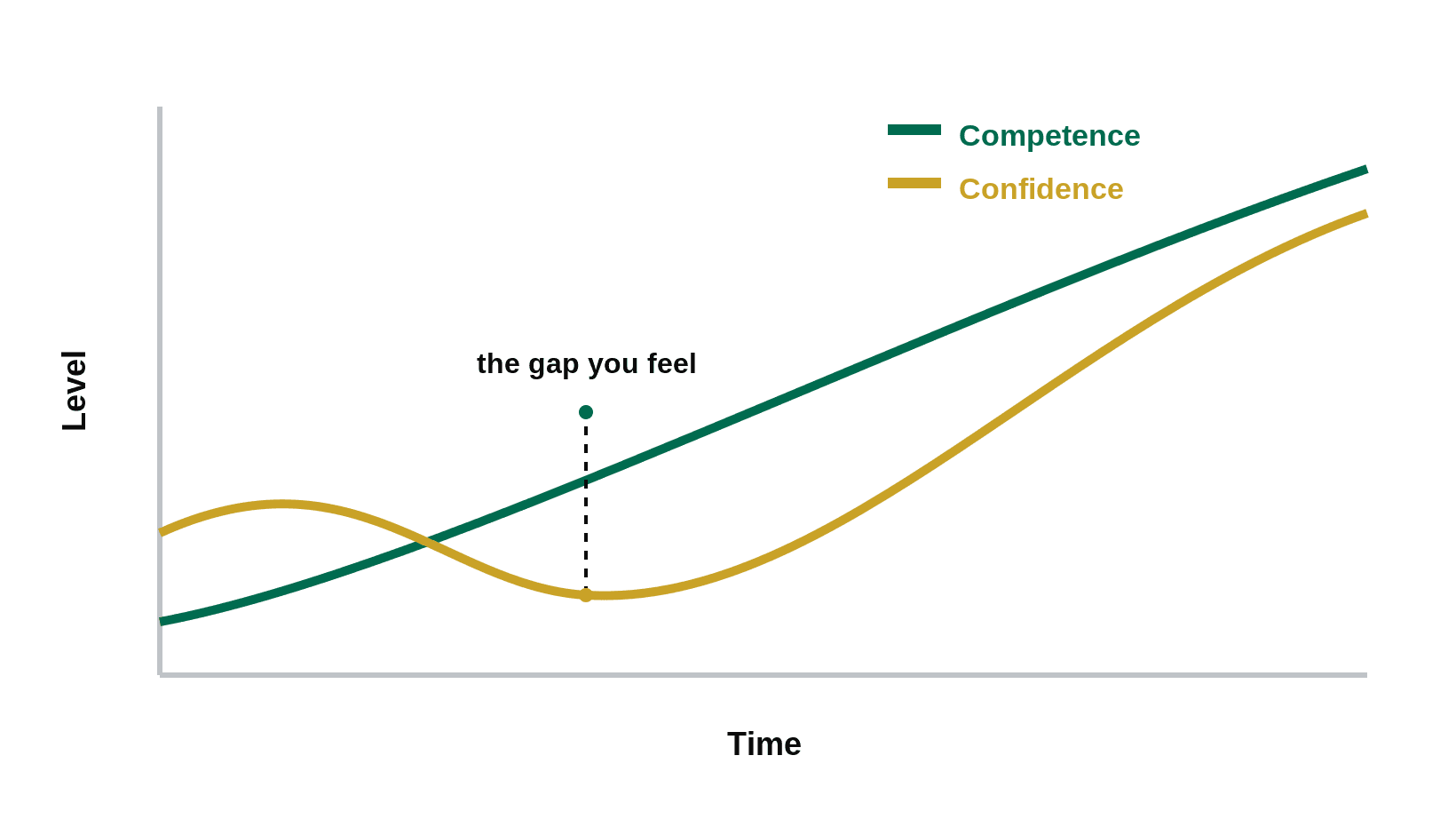
A true beginner cannot see that gap yet. They do not feel like a fraud because they do not yet know enough to doubt themselves. You feel it because your taste arrived before your skill did. You can now see what good looks like, and you can see that you are not there yet, and your brain files that honest observation under the wrong label. It calls it fraud. It should call it the climb.
So when the feeling gets loud, try translating it. “I do not belong here” almost always means “I now know enough to see what excellent would look like, and I am not excellent yet.” That is not a confession. That is a careful person being honest about a standard they are still reaching for.
You are comparing your inside to everyone else's outside
There is a specific trick the feeling plays, and once you see it, it loosens its grip.
You experience yourself from the inside. Every hesitation, every “I should know this already,” every time you quietly looked something up in another tab before a meeting. You carry a complete, unflattering record of your own doubt.
Then you look at the people around you, and you only get their outside. The calm voice in the standup. The clean summary in the email. The colleague who answers a hard question without blinking. You do not see their second tab. You do not see the three drafts before that clean email, or the evening they spent worried they were about to be exposed in exactly the way you are worried now.
So the comparison was never fair. You are holding your bloopers reel up against everyone else's highlight cut and concluding that you are the only one acting. You are not. The composed person across the table has a doubt track running too. They have just learned, the way you are about to, that the track can play without running the show.
This is also why the feeling is so common in delivery work. Our job is to stand in front of the room and create a sense that things are handled, even on the days they are not quite. We get professionally good at showing the outside. Which means we spend all day surrounded by other people's outsides. Of course it feels like everyone else has it figured out. We built that impression on purpose.
What I tell every mentee who feels found out
I am not going to tell you to feel confident. Telling someone to feel confident is about as useful as telling them to feel taller. But there are a few things you can actually do, and they work whether the feeling cooperates or not.
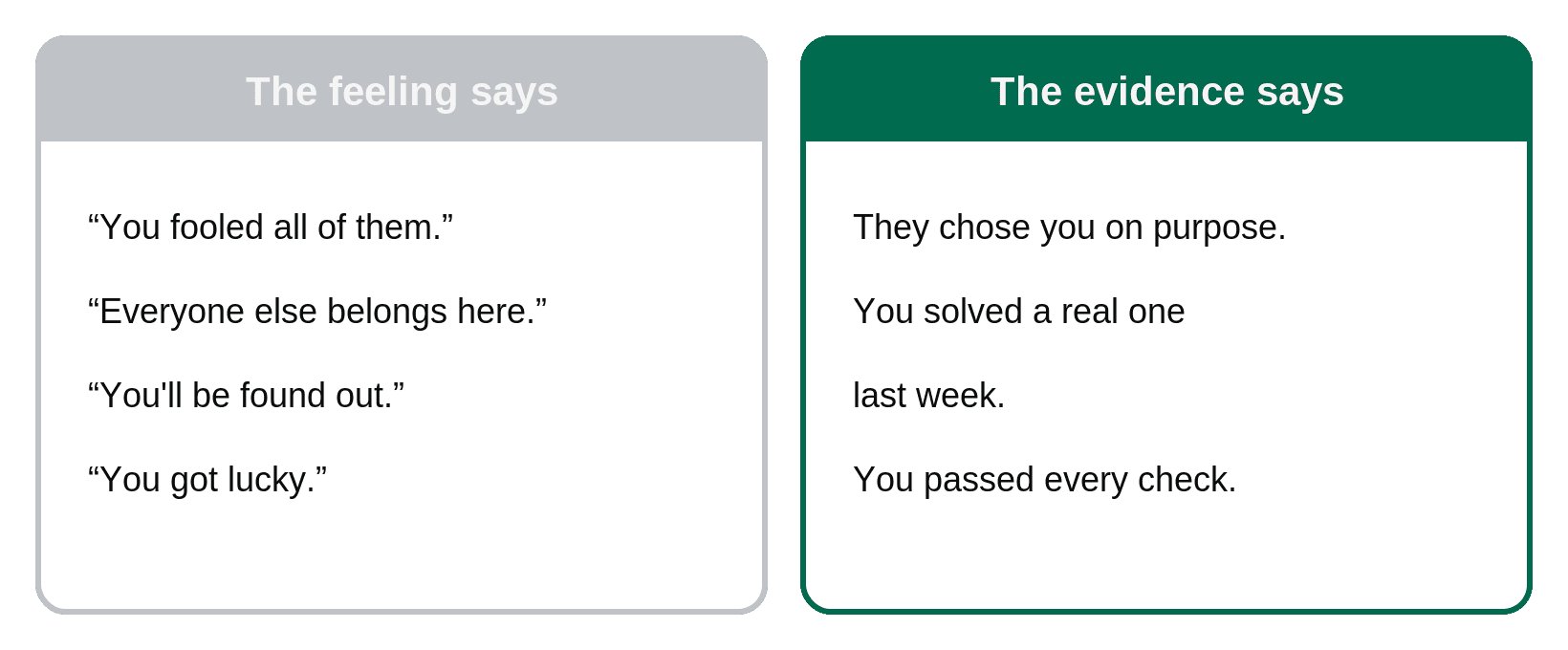
Separate the feeling from the evidence. The feeling says you cannot do this. The evidence is the interview you passed, the team that chose you, the problem you untangled last Tuesday. Feelings are loud, and they edit the record. So write the evidence down somewhere the feeling cannot reach it.
Keep a done file. A running note of real reps. The retro you turned around. The blocker you cleared before it became a fire. The stakeholder you talked down from a bad idea. When the feeling gets loud, you do not argue with it. You read it the facts.
Act before you feel ready, because the feeling is always late. We have the order backwards. We think confidence shows up first and then you perform. It is the other way round. You act, it goes okay, and confidence wanders in a few weeks later to take the credit. If you wait to feel ready, you will wait the rest of your career.
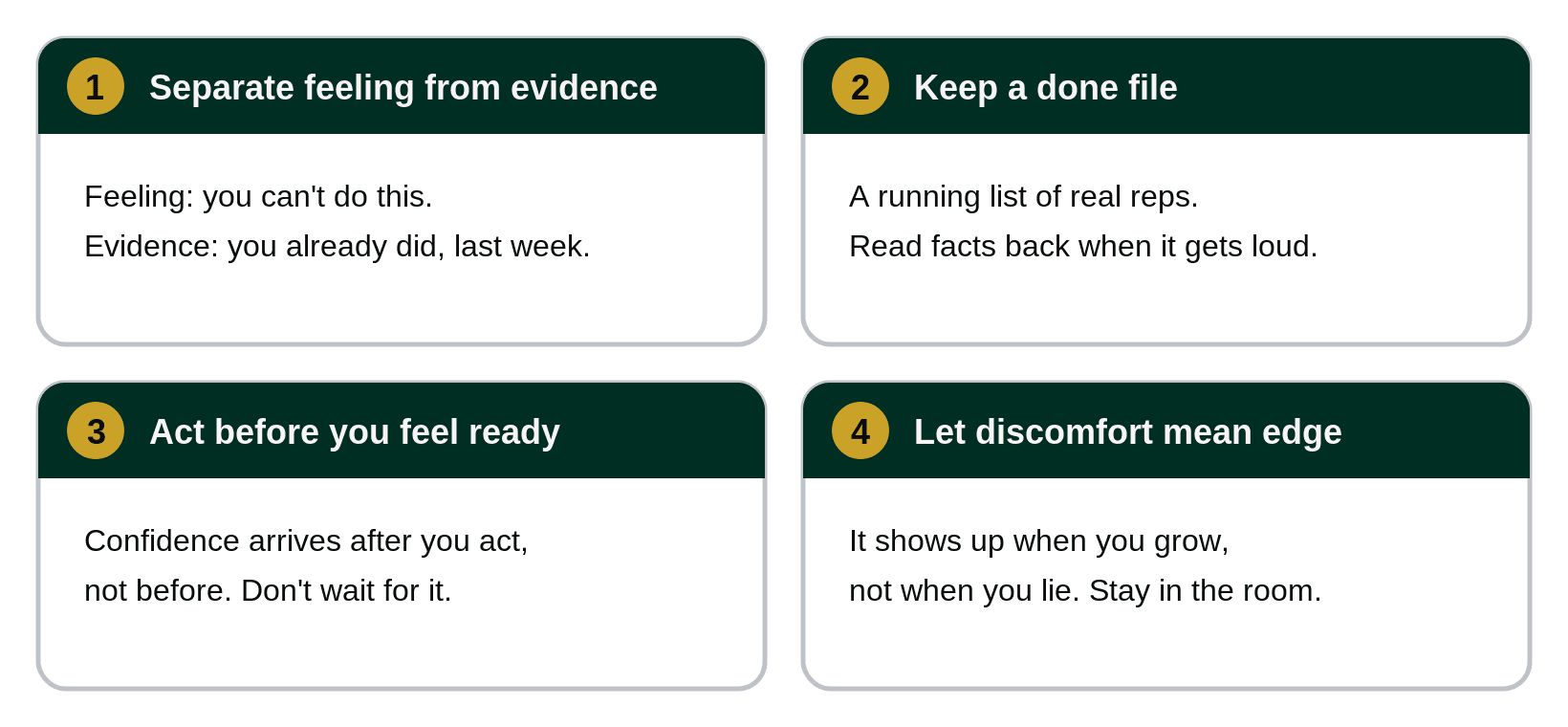
Let the discomfort mean edge, not exit. The plan most people run is simple: feel the discomfort, decide it means they are in the wrong place, retreat. But that same discomfort is what growth feels like from the inside. The work is not to make it disappear. It is to stop letting it make your decisions for you.
The day it gets quieter
Priya messaged me again about six months in. She still gets the feeling. But she reads it differently now. The last time it showed up, she told me, she caught herself and thought, “oh, I am at an edge again.” Then she did the work anyway.
That is the honest ending. The feeling does not vanish for the people who keep growing, because they keep stepping to new edges, and the edge is where it lives. A senior person you admire has not killed it. They have just stopped believing it when it tells them to leave.
If you are switching careers or stepping into your first delivery role, this matters more than it looks, because the feeling peaks at the worst possible moment. It gets loudest right when you are most employable and most likely to quietly sabotage yourself: to pull the application, to soften the resume, to go silent in the interview where you should have spoken. Knowing what the feeling actually is takes some of its power back.
You are not a fraud who got lucky. You are a person who keeps choosing rooms slightly bigger than the last one. That pressure in your chest is not a warning to go. It is the feeling of growing into the space you already earned.

Subscribe to the Newsletter
Join our growing community and get alerted first on our every article.
*By subscribing, you agree to send your information to our Company who agrees to use it according to their Terms and conditions and Privacy Policy
About the author
I believe the strongest tool and flex each of us has is our belief. When we truly believe in something, we align our mindset, energy, and actions with the right effort and guidance. That is when achieving almost anything becomes possible. This is how I help mentees at OAKKTREEUNII move into Software and Project Management careers for better pay, better confidence, and better work-life balance.
Is imposter syndrome a sign I am not qualified?
No. It usually shows up when you stretch into something new, not when you are unqualified. The people who feel it most are often the ones paying the closest attention.
How do I deal with imposter syndrome in a new job?
Separate the feeling from the evidence, keep a record of real wins to read back, and act before you feel ready, because confidence follows action, not the other way around.
Does imposter syndrome ever go away?
It gets quieter, but people who keep growing keep meeting new edges where it lives. The goal isn’t to kill the feeling, it is to stop letting it make your decisions.
Comments